Showing posts with label Music Tech Forum. Show all posts

Saturday, November 1, 2008

Week 12 Forum - Stephen steers the university battleship through oceans of amusement


Basically we discussed the course (and anything else we that came up).

There were some really interesting points raised about the nature of education, particularly in an artistic field. Is it actually possible to have an argument with Stephen? I suspect not - even if you get close, he'll pull out a wise cooking metaphor and make you stop and consider.

I agree with David that studying art that you don't (yet) enjoy is a mind opening process that is always a good thing, particularly if it's very developed art.

The stuff I said in forum was kind of just a rant and wasn't very clear, so I don't think it was very helpful. But when I mentioned Year 12 Music Tech, what I actually had at the back of my mind was that it's kind of opposite to this course. Here, we are all taught a wide range of techniques, must analyse a wide range of fixed styles, and then have to create music that uses particular techniques in a particular style. Last year, it was entirely about thinking of a sound you like and then heading for it, and all the tuition was about developing your particular compositions.

Well the outcome is that I consider pretty much everything I've done musically before the last 6 months to be embarrassingly boring really... so I think it's better to learn techniques, then take a breath and quickly make some music every now and then. Maybe this is because in electronic mediums, much of the originality come in the techniques of creating sound, and there are limitless undiscovered methods.

Reference: Stephen Whittington. "Music Studies (Music Technology) Course Feedback." Lecture presented at the Electronic Music Unit, University of Adelaide, 30 October 2008.

Thursday, October 16, 2008

Week 10 Music Tech Forum - Honours Presentations


Presentations from the honours students!

I really loved the animation projects of the first speaker. The animations were really pretty and I think the music fitted them perfectly. I loved the piano style and the vocals and I think I could listen to it on CD for enjoyment. A very comfortable contrast to what we normally hear in forum... but there is a place for that too.

The concept of the program that sonifies network data was totally awesome. I really like the way that it artistically represents the modern world where we're surrounded by machines that are automatically sending each other huge amounts of information before we even ask them to fetch us anything. It's a noisy society where we're bombarded with information from all angles, so why not convert it into music?

I guess what the program currently lacks on the musical front is a way to give the results some kind of macro form...

I was also wondering if the program can pull much meaning from the data values? For example, is it very different to modulating the values of the synth with a random oscillator? But I think these problems can be solved (don't ask me how). 

Reference: Stephen Whittington. "Week 10 Music Technology Forum - Honours Student Presentations." Lecture presented at the Electronic Music Unit, University of Adelaide, 16 October 2008.

Wednesday, October 15, 2008

Week 9 Forum - 3rd Year Presentations!

The third year presentations were all really impressive. I'll just describe that ones that come to mind first.....

Probably my favourite listening experience was the surround supercollider experience. This is partly because this is not something I'm used too but I reckon it's a worthwhile endeavor. I think that the current consumer craze is a little stupid cause I'd much prefer decent stereo sound than poor surround and a lower mids gap between the sub and sattelite speakers....

But luckily the Blue Skys have no such problems.... I loved being able to close my eyes and imagine I was in a jungle of crazy machines. I enjoy Super Collider's glassy sound sometimes (during 3rd year presentations). I'd like to hear it used with other contrasting elements.

The piano chord generator really interested me. I understand the chord choosing algorithm, but I didn't quite get how the rhythm generator works. I think was a really impressive example of this kind of patch. The output sounded really quite musical, I think because of the clever chord voicing system.

The melody warper was a rad idea that worked well I think however I was a bit distracted by all the changes of tempo (which were a good idea). I think it would be awesome to record the midi and render it elsewhere...

Reference: Stephen Whittington. "Week 9 Music Technology Forum - 3rd Year Presentations." Lecture presented at the Electronic Music Unit, University of Adelaide, 9 October 2008.

Wednesday, September 24, 2008

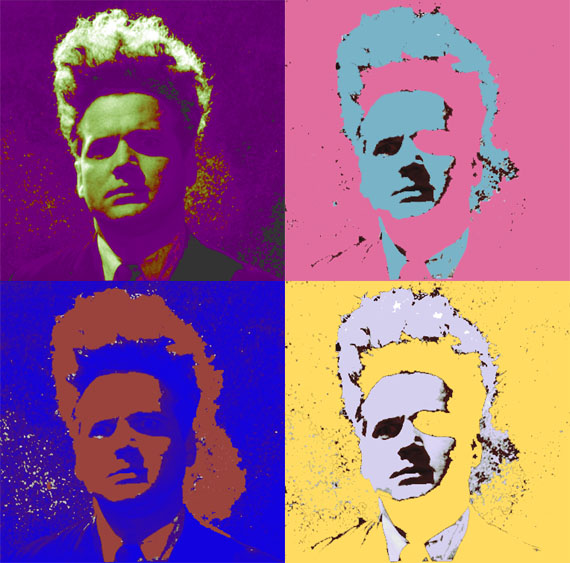
Week 8 Forum - Eraserhead

I was fairly excited to watch Eraserhead because I keep hearing about Lynch and I don't think I've seen any of his other films. I really enjoyed it - I'd definitely prefer to see something totally different than another boring movie stamped out of the usual mould.

There are some favourite moments.... I love the way Lynch manages to ironically reserve dialogue for completely obvious, pointless remarks. "Oh... you are sick" was insanely funny in my opinion, as well as "like regular chickens" and a few others. That explains why there is an Amon Tobin song of that name....

I like the way we do very different things in forum every week, and I think that watching a fairly experimental movie is a worthwhile endeavour when many of us are interested in film sound design and music. The constant rumbles and drones created a strong atmosphere and I thought they had a pleasantly solid tonal character. The contrast of the music and noise was very effective. 

I also think that all art forms influence each other in interesting ways and so it is a good thing to find interesting works in other disciplines.

Reference: David Harris. "Week 8 Music Technology Forum - Eraserhead." Lecture presented at the Electronic Music Unit, University of Adelaide, 18 September 2008.

Thursday, September 11, 2008

Week 7 Forum - Second Year Presentations

Super Collider

The second and and some third years showed us what they have been up to. This consisted mainly of max and supercollider patches.

I enjoyed it all! Sanads dance piece was pretty extensive for something he made last night.... I enjoyed it. He suggested that it is quite different to the dance music that people like, but I'm not so sure.... Other than the 6/8 time signature, I don't think its that different from what I've heard. I think this is probably because I don't understand the intricacies of dance music at all.

Edward's visual patch was way cool - very impressive and I liked that he could tweak parameters and get really different patterns.

The chord progression generator seems like a very useful device, even if it is just there for inspiration. The grid probability approach seems quite intuitive.

Freddie's "game" idea for his Max patch was really hilarious - I love it. Never would have thought about turning algorithmic composition into a game! Get your kids into max/msp this way......

I thought the supercollider stuff was interesting but it looks like heaps of work to get decent organic textures. That said - John Delaney did an amazing job of getting beautiful sounds from the code, and Matt's Fatboy Slim sample was absurdly rad.

Reference: Stephen Whittington. "Week 7 Music Technology Forum - 2nd and 3rd year presentations." Lecture presented at the Electronic Music Unit, University of Adelaide, 11 September 2008.

Thursday, September 4, 2008

Week 6 Forum - AUDIO RASA CHARADE FUN GAME PERSIAN BABY

In today's exercise we attempted to recognize sonically represented emotions. Some radically different approaches were used in portraying the "rasa" such as:
  • Sampling different styles of commercial music
  • Downloading the pure, instinctive cries of yet-to-be-conditioned babies from youtube
  • Traditional western art music conventions
  • Moody synthesized textures
  • Drawing on the cliches of mainstream cinema
  • Speaking about emotional subjects in a foreign language
Some techniques definitely seemed more effective than others. While I thought it was really cool, we didn't seem to be very good at understanding Sanad's Persian even with strong inflections. People who drew strongly on obvious cliches and used a range of different forms (eg acoustic instrument, synth, nature sound) seemed to be most successful.

I think it is very interesting that many of the baby cries were quite understandable and Stephen suggested that there may be some aspects of language and aural association that are fundamentally built into our physiology and not learnt. Thanks to Freddy for this interesting point.

I was particularly impressed by the guy that used a lot of synthesized/processed sounds. I think he did a great job at portraying emotion through sonic texture (which is what we should be focusing on in our course) and without using obvious cliches.

Reference: Stephen Whittington. "Week 6 Music Technology Forum - Emo Music." Lecture presented at the Electronic Music Unit, University of Adelaide, 5 September 2008.

Saturday, August 30, 2008

Week 5 Forum - Negativland

I really enjoyed Stephen's Negativland presentation. Watching him nod his head happily and quietly sing with his opening track was an absolute joy (and treat).
For me, Negativland was a chance to think about the nature of satire and humour in art. I'm sure Stephen would agree with me that there is a place for jokes in music (The other Steven has been known to exclaim that Haydn is a very funny man). I think that Negativland's strategy of satirising everything whether they have a problem with it or not has good spirit because they are also satirising themselves and the idea of satire at the same time as making a point. I agree that "Christianity is Stupid" probably does not represent Negativland's actual opinion on this religion and in fact they are possibly making fun of the idea of satirising or complaining about religion. I am not offended at all by their work because I think they it is obvious that they are never entirely serious.

That said, I think that some works were clearly more serious than others. For me, 'My Favourite Things' was the most light-hearted while 'Guns' was the most pungent and affecting (and not very funny).

Thanks!

Reference: Stephen Whittington. "Week 5 Music Technology Forum - Negativland." Lecture presented at the Electronic Music Unit, University of Adelaide, 28 August 2008.


Saturday, August 23, 2008

Week 4 Forum - Indian Classical Music

Haysa
Joy, Humour - we can laugh by being happy.

Orchestra pianissimo major chord, twittering birds, crowd of people laughing, happy sigh, sustained synth tone

Adbhuta
Mainly Wonder - rasas.info says "When we understand that there are things that we do not understand, it makes life beautiful and exciting." The related ideas include curiosity and astonishment.

Windows 95 Startup sound, Major 9 Chord, Reverbed sigh, lush digital synth pad, rising shepherd tones, shiny FM tones

Veera
Courage also determination, pride, concentration. Interesting: Talking about your powers will reduce them, also courage does not mean independance. 

Viking metal riff, V-I in a minor key, cello solo within an orchestra, solo military trumpet, 

Karuna
Sadness, pity and compassion. The aim is to try to feel a less self-centred sadness and have pity for others. 

Minor 7 chord, Cry of a single bird/any dying animal, a constantly evolving noise with unsettled filter sweeps which appears to be unable to resolve

Krodha
Anger.

Distorted sounds eg guitar/drums, diminished chord, growl, metal whack, grinding noises, white noise swell 

Bhibasta
Disgust

Loosely distorted flapping guitar, clipped recording, hihats, sounds of vomiting, spitting, violin bowed incorrectly, untuned year 8 band, very bright low analog synth tone

Bhayanaka
Fear and worry, nervousness, jealousy etc.

Raised 7 in melodic minor scale moving up to 1, listening to the radio when it's almost tuned to a station and you can only hear unrecognisable voices, whimpering animals, creaking of doors/any creaking, breathing

Shoka
Grief, remorse, sorrow, misery

Quiet minor flute melody, quiet swell of diminished triad, whispers that you can't quite make out, radio white noise (the non-scary kind)


Shanta
Peace. Also: calmness, exhaustion. Sounds like you get there by obtaining the things you want as well as repaying your debts to society and thus making everything harmonious and chilled.

Root position tonic triad with octave below, single analog synth bass note, soft filtered characterful white noise, jungle ambience, cat purr, wind in trees, sigh

I've also come across Raudra - anger, shringara - love, vibhatsya - disgust.

References: 
Stephen Whittington. "Week 4 Music Technology Forum - Indian Classical Music Emotions." Lecture presented at the Electronic Music Unit, University of Adelaide, 21 August 2008.

"9 Rasas - The Yoga of 9 Emotions." Rasas.info. http://rasas.info (31 August 2008)


"In adolescents, periods of sadness may come when one feels neglected and tries to produce pity in others." - mmmm agreed.

Tuesday, August 19, 2008

Week 3 Forum - First Year Presentations


Cool to see what everyone's been up to!

For me, one highlight was Josh's composition and sound for the short animation project. I think I noticed a clever segue or two where the music changed in mood while cleverly retaining elements of the previous section. Can't believe this is just a hobby for him.

It was great to hear everyone's music concrete, though as the second and third years commented, that genre can be a little harsh on the ears if you are subjected to it for great time periods. I really enjoyed everyone's for different reasons, especially Jamie's trumpet skills.

Was nice to hear a contrasting AA project from Alex. Was definitely a good recording and sounds better on nice speakers (sounds incredible in studio 1). I reckon a wider mix would really help to make things sound clearer and more interesting.

I thought it was interesting that we all turned out these themed concrete pieces that were meant to tell a story (I was guilty but luckily no-one could recognize my kitchen sounds and plot of using the microwave). Then Stephen announced that concrete was more about abstracting real sounds to create something that may not have any explicit meaning. Hmmmm we look kind of stupid.....

We need to hear from Lisa...

Reference: Stephen Whittington. "Week 3 Music Technology Forum - First Year Presentations." Lecture presented at the Electronic Music Unit, University of Adelaide, 14 August 2008.

Sunday, August 10, 2008

Week 2 Forum - Some of David Harris's favourite things.


The first item was David's latest composition "Terra Rapta" which was written for the Grainger String Quartet. I really enjoyed it, particularly the disjointedness of the rhythms. Perhaps it really helps having such great musicians interpreting the music because they add an extra layer of musicality to the aggressive writing. I find Steven's view on program notes interesting. I think that they can particularly narrow your mind for instrumental music where there is no text and your mind is free to wander. But I understand that this piece was written with a particular theme in mind and so David was keen to express this.

The second part of the forum involved listening to an entire Schubert string work. It was definitely a great experience for me to listen closely for this amount of time (relating back to Steven's discussion of listening habits last week) however I didn't enjoy the majority of the piece much. I was very prepared to listen to it because I could tell that David really sees something special in it and so I wanted to try to see the magic that he sees, however I missed out.

References: David Harris. "Week 2 Music Technology Forum - My Favourite Things." Lecture presented at the Electronic Music Unit, University of Adelaide, 7 August 2008.

Sunday, August 3, 2008

Week 1 Music Tech Forum - Listening Culture

Excessive volume levels
I think that this is a problem and it may exist because it's easy to crank up an ipod to full volume without annoying the neighbours.

Lower listening quality
Possibly people are paying less attention to music when they listen to it.  One thought is that there is nothing wrong with music designed to be listened to with reduced attention. Often the duration is longer than normal music and so you can still perceive the same amount of detail though it is more spread out.

My Life in the Bush of Ghosts
Steven was talking about the whole cocoon idea where we bring our own music in order to provide comfort in unfamiliar situations or to shut out the scary outside world. Perhaps this is really a cultural shift towards people preferring their life to have an artificial movie soundtrack (as Steven describes it). Well, as scary as it sounds, I think this is half interesting. Maybe we are all just striving to make our lives like the stereoptypes we see in the movies, but actually I think it's fun to crank Philip Glass and walk around the city and pretend you're living in Koyanisqatsi. Also observing the quiet businessmen on the train to a soundtrack of Mr Bungle can be quite hilarious.

References: Steven Whittington. "Week 1 Music Technology Forum - Listening Culture." Lecture presented at the Electronic Music Unit, University of Adelaide, 31 July 2008.

Sunday, June 8, 2008

Week 12 Forum - Scratch Tutorials, Windowlicker

We watched some special features from the "Scratch" documentary. Many of the segments were amusing in some ways, however there were interesting parts. The tutorial on how to rock a party was quite enlightening because I've always wondered what the DJ is actually supposed to do at a party other than play some records. There is obviously much skill in tempo matching, especially in realtime. It was quite a show of skill to watch the DJ keep two records in time that are both getting faster at different rates.

My other favourite part of the session was the Windowlicker video clip which I hadn't seen before. I love the way that although I assume the video tries to parody other videos that try to sell music with sex, it includes all the same glossy production techniques. It's great to see to two guys fail miserably and embarass themselves while picking up chicks. Also fantastic is the use of the exaggerated limousine shot which corresponds to a glitchy effect that is in the style of Aphex Twin but also sounds like a crash with skidding. And everyone loves to see a happy man dance. Many of the events work well with the music and increase the satirical effect.

Reference: Steven Whittington. "Week 12 Music Technology Forum - Scratch Special Features and Video Clips". Lecture presented at the Electronic Music Unit, University of Adelaide, 5  June 2008.

Saturday, June 7, 2008

Week 11 Forum - Philosophy of Music/Environmental Discussion

This week we discussed the philosophy of music which quickly led to a discussion of the environment in general.

Generally I think I kind of overlook the impact my music making has on the environment and take the attitude of "I need it, therefore no point in stressing about it's impact". I found another guy's blog interesting with a kind of existentialist vibe. But I disagree - I believe in right and wrong and I think everyone makes a difference. I do think it's slightly strange that we always assume we know what is good and bad. Meursault was so addictive.

The most interesting thing that I heard in forum was Steven's comment about an aboriginal group that decreased its palette of tools because it didn't need as many in a new location. Forgot that that was possible - doesn't seem to be the Western way. We have such an obsession with hoarding resources and increasing everything we can. I don't think we could ever stop now (without some kind of crisis) but it doesn't seem very worthwhile because it obviously doesn't actually make us happy. But also I agree with Steven that technology has got us into this mess and hopefully it can get us out.

References: 
  • Steven Whittington. "Week 11 Music Technology Forum - Philosophy of Music". Lecture presented at the Electronic Music Unit, University of Adelaide, 29 May 2008.
  • David Harris. "Week 11 Music Technology Forum - Philosophy of Music". Lecture presented at the Electronic Music Unit, University of Adelaide, 29May 2008.

Friday, May 23, 2008

Week 10 Music Technology Forum - Turntablism

This weeks forum presentation was the DVD documentary "Scratch" about the history of turntablism. Steven introduced the DVD by explaining that the turntable had actually been used as a musical instrument long before "turntablism", one example of this is in early pre-magnetic tape music concrete where vinyl recordings were mixed and rerecorded.

I found the DVD very interesting. I never realized the extent of the DJ "solo" culture - I only knew them as accompanists to rappers with the occasional flourish of a complex scratch. The DMC world championships seem to hold considerable prestige for many.

The amount of musical exploration that has been created by experimentation with a former domestic playback device is extremely amazing and I think that this illustrates that interesting music can  gleaned from all kinds of areas if someone is willing to take the time to study it as the early DJs did. 

The "Amen Break" video was further evidence of this point (and was also very amusing). It's even more impressive that there are entire genres heavily relying on this sample. Perhaps this 5 second recording could be considered their instrument. Many sample maestros write for the same sample just as many composers write for the same instruments.

Reference: Steven Whittington. "Week 10 Music Technology Forum - Turntablism and the Amen Break". Lecture presented at the Electronic Music Unit, University of Adelaide, 22 May 2008.

Thursday, May 15, 2008

Week 9 Music Tech Forum

Today's forum was completely eye-opening to the world of music tech. Each of the experienced music technologists were involved in so many interesting studies.

I particularly enjoyed Seb's "milk crate" music. I really enjoyed much of the music and I think that it's a really interesting idea to try to "force" much music out of a short amount of time. A fantastic way to avoid procrastinating and spending time making decisions when it is possibly more productive to experiment and plan/think as little as possible (something I'm poor at). The results of milk crate support the value of this fast working style.

The water-based controller was also very very cool and obviously not a fully exploited concept yet, but I can understand why with the amount of zany stuff Seb is up to.

The second presentation was more chilled with some discussion of the relationship of music to science and history. Loved the quartz bowls, and also loved the theories about ancient constructions. Just been reading up on ancient greek musical philosophy for history and the importance ancient civilizations placed on music is really interesting. I'm beginning to think that there's not much difference between coincidence and real conspiracy anyway with regards to the wide use of the A# "natural" frequency.

Reference: Sebastian Tomczak, Darrent Curtis. "Week 9 Music Technology Forum - Recent Works". Lecture presented at Electronic Music Unit, University of Adelaide, 15 May 2008

Thursday, May 8, 2008

Week 8 Forum - Peter Dowdall - Audio Engineering, Session Management

This week experienced audio engineer Peter Dowdall spoke to us about many aspects of recording, editing and mixing for bands or advertising agencies.

First he discussed technical details and session management concerns on a recent recording of the "Mike Stewart Big Band" at EMU. It was good to hear a quality commercial recording done in EMU using nearly all in-house equipment. I was surprised at the amount of editing that Peter used even on Big Band music with skilled players. The editing was not audible and the resulting product was tight.

I found Peter's stories about his work in advertising and relating to clients interesting. He has had to record and edit without soloing tracks because the people sitting behind him in the control room needed to hear the whole mix. I see that it's quite important to remember that clients don't know what edits are easy or difficult to do, and so you have to foresee future requests and protect yourself in ways such as creating submixes so vocals can be replaced without redoing the instrumental mix. I liked Peter's suggestion that sounds that are considered wrong today are likely to be fashionable tomorrow. I appreciated advertising music more when he explained some of the art of achieving "maximum impact".

Reference: Peter Dowdall. "Week 8 Music Technology Forum - Audio Engineering and Session Management". Lecture presented at Electronic Music Unit, University of Adelaide, 8 May 2008

Thursday, May 1, 2008

Week 7 Forum - Tristram Carey

Tristram Carey was the founder of the electronic music unit that we all know and love, and also an electronic music pioneer, separately developing the synthesizer almost concurrently with Robert Moog. Last week, Tristram passed away and so Steven presented a tribute forum session about him.

This wasn't immediately apparent, because the session began with a bleeping sound installation that referenced Tristram's time as a navy radar operator (though the 2nd and 3rd years couldn't see the connection).

Steven explained some of Tristram's work and then we watched a documentary about him and his fellow "Electronic Music Studio" members. I was surprised that I hadn't heard of any of these pioneers while the house of Moog gets so much attention.

In reply to Steven's suggestion that the study of history is worthwhile, after spending 2 minutes with Carey's relatively simple "picnic" synthesizer (as used by Pink Floyd), I agree. I think that by looking at the origins of electronic music we can find new pathways, that were never fully explored; in 2 minutes I heard sounds from "synthy" with character that I have never experienced from the software which dominates today. Another discussion I found interesting was the differing attitudes of the early electronic musicians towards popular modern electronic music genres.

Reference: Stephen Whittington. "Week 7 Music Technology Forum - Tristram Carey". Lecture presented at Electronic Music Unit, University of Adelaide, 1 May 2008

Saturday, April 12, 2008

Week 6 Forum - Vicki Bennett's Chunky Sample Sound Works

This week David introduced us to the sound collage radio shows of Vicki Bennett. We listened to some of her work and then heard about her ideology. We then watched a film by David Harris while concurrently listening to another of Bennett's radio shows. David explained that the video was not intentionally synchronized to the sound work at all however it was interesting that there seemed to be strong connections.

During the usual philosophical after-party, Stephen raised the question of whether the practice of "recycling" music to create new works is becoming more prevalent and whether there is a separation between "creators" and "recyclers". As was suggested, music has always been recycled in various ways eg the medieval motet which uses pre-existing chants. I think that there is no clear separation between new and recycled music because all music is influenced by other music and takes some elements from pre-existing works. I think that Vicki has a characteristic (and idiosyncratic) way of using modern technology to recycle and the unique methods and results make her work original. Though some fret that her work is not time consuming to create, neither is improvised jazz or bird-song and they are both rad and legit.

Reference: David Harris. "Week 6 Music Technology Forum - People Like Us". Lecture presented at Electronic Music Unit, University of Adelaide, 10 April 2008

Friday, April 4, 2008

Week 5 Forum - Pierre Henry Documentary

This documentary and subsequent listening session was my first experience of the work (and personality) of pioneering music concréte composer Pierre Henry.

I enjoyed some of Henry's music from a general listening perspective, however I was more attracted to the philosophy of most of the pieces. I thought his use of speakers in different places and faced in different directions for the performance of his work was very interesting and seems novel even today when one would expect such a simple idea to have been more widely used. "The sound of your footsteps is beautiful" Henry hurriedly explains to a jogging man. I guess this sums up his belief in the music of sounds not made by traditional musical instruments, which was obviously very radical in the 1950s when he first became known. This was evidenced by the comments from the audience of one of his early concerts which were sometimes confused or negative.

Henry's speaker-filled house was also very cool as was his use of electronic beats in a concert outside the pompidou centre which are characteristic of a musical genre that only came into being around 40 years after Henry's early music concrete. He is must be very open-minded to use such modern sounds.

Reference: Stephen Whittington. "Week 5 Music Technology Forum - Pierre Henry." Lecture presented at the Electronic Music Unit, University of Adelaide, 3 April 2008

Saturday, March 29, 2008

Week 4 Forum - Student Presentations Part II

This week we heard work by the remaining 2nd and third year students.

The first presentation was about a granulator processor coded in max/msp. It was extremely cool. I think it could be a really interesting live performance tool because it makes cool electronic sounds in-realtime using audio that is also recorded on the fly - more interesting than triggering samples.

Another interesting presentation was about some dance music that someone created. A discussion about whether max/msp was useful for listenable/commercial music followed this. Some people expressed the views that this experimental program-it-yourself software is only useful for obscure music and that using more traditional tools is a more efficient workflow for creating commercial music.

A surround-sound installation was created in an art exhibition space (by some imaginative music tech student). I thought that the project was really cool and I'd love to do something like that one day.

Finally the last two presentations were about performance art and again using tools to manipulate audio in realtime for live performance. The ambient guitar piece achieved some really cool sounds and the maker of the less ambient piece demonstrated uber micro in a furious battle with various audio software.

Reference: Stephen Whittington. "Week 4 Music Technology Forum - 2nd and 3rd year presentations." Lecture presented at the Electronic Music Unit, 27 March 2008

This post was edited to conform to the word limit policy on 3/4/08